
Stories of Light
The Invisible Lifeline: Securing Dnipro Children’s Hospital
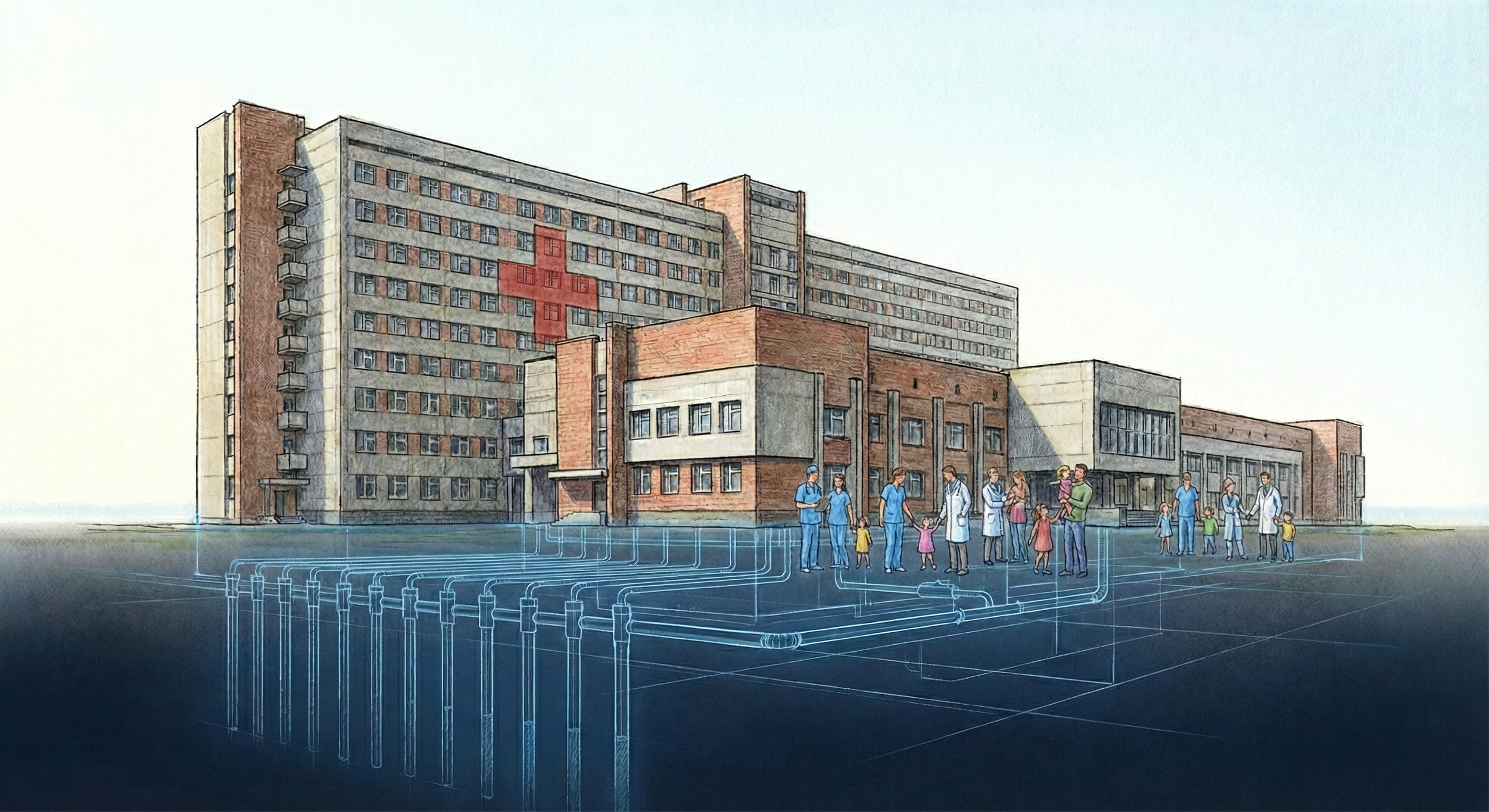
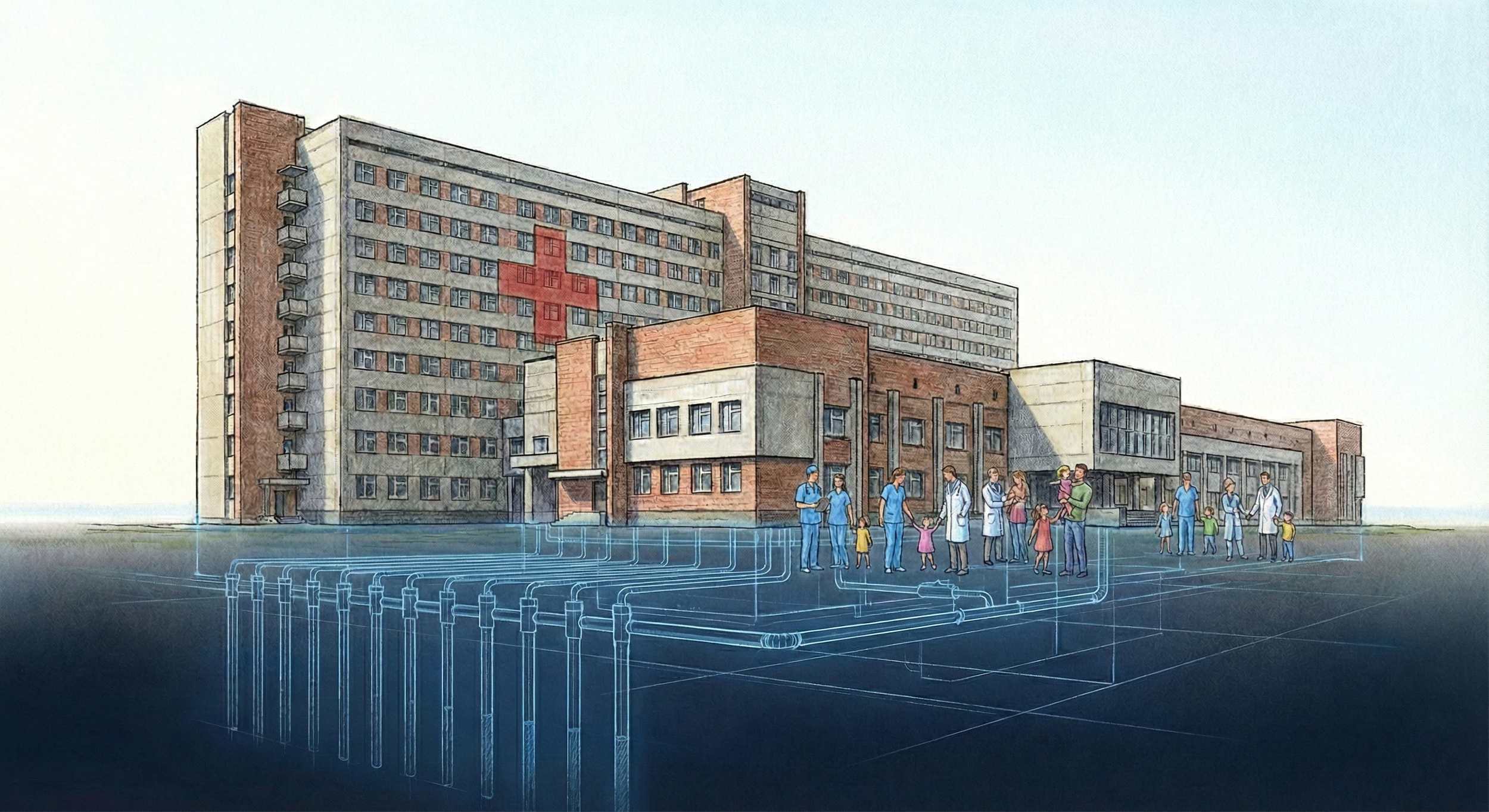
For months, the Dnipro Children's Regional Hospital relied on a daily convoy of water trucks to keep their operating rooms running. It was a logistical tightrope for a facility serving 241,000 patients. Read how we replaced temporary washing stations with deep-water boreholes, securing permanent autonomy for the region’s most critical medical hub.
The most important sound at the Dnipro Children's Regional Hospital wasn't the beep of a heart monitor; it was the rumble of the water truck arriving in the courtyard.
For the staff serving 241,000 children and mothers annually, the main taps had gone dry. The hospital’s connection to the municipal grid had failed, severing the facility from its primary water supply.
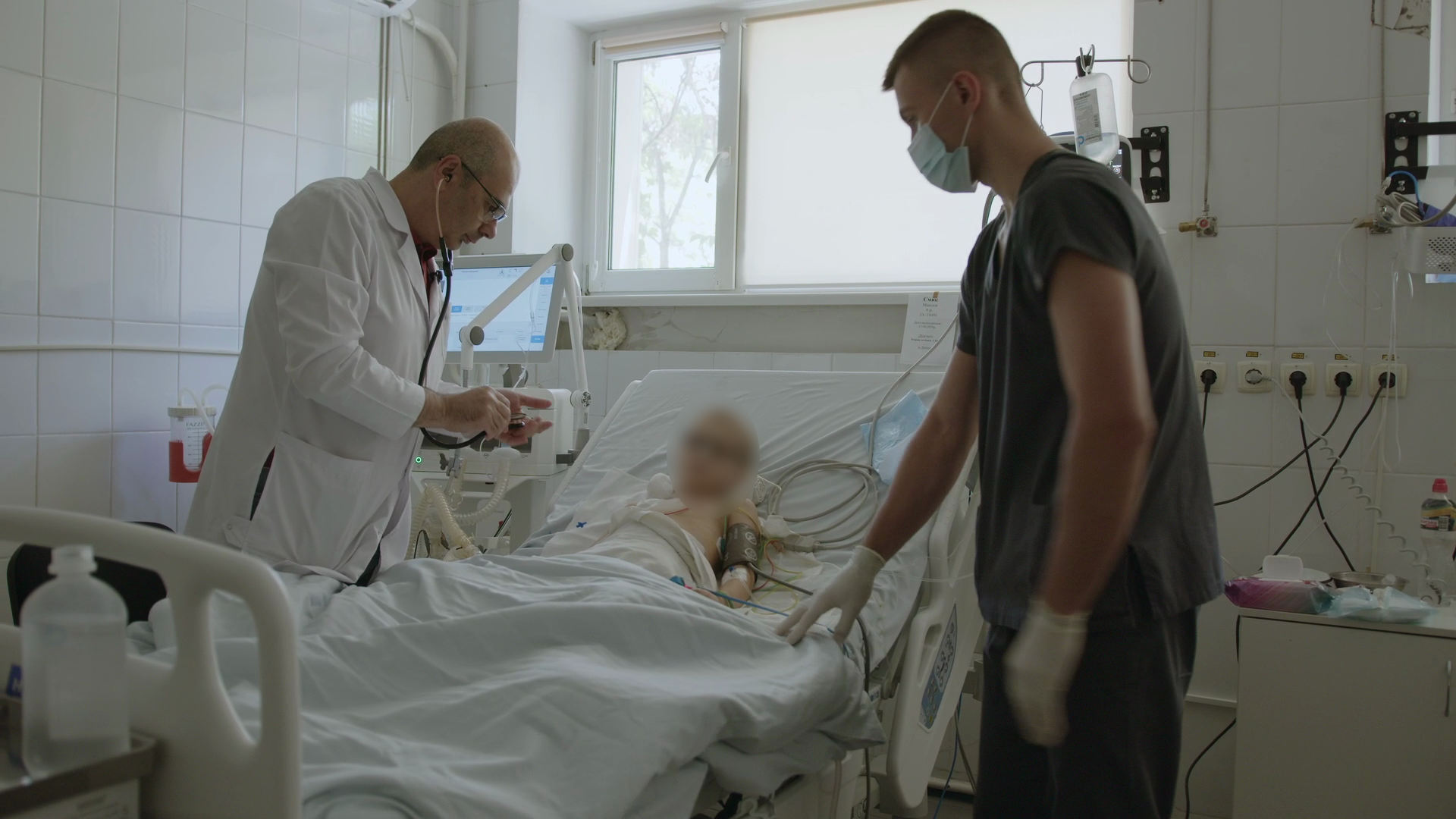
To keep the hospital running, they established a rigorous logistical rhythm. Water was trucked in daily to fill reserves and feed temporary washing stations throughout the facility. Surgeons preparing for operations scrubbed in at these stations, maintaining sterile protocols through sheer discipline and resourcefulness.
While the hospital remained operational, the situation was precarious. A major medical fortress was effectively running on a daily delivery schedule. They were walking a logistical tightrope: any disruption to the trucks—whether from mechanical failure or the volatile conditions of the war outside—would jeopardize the strict hygiene standards required for patient care.
The Strategy: Infrastructure Resilience We stepped in to end this vulnerability. We didn't just want to fix the pipes; we wanted to ensure the hospital possessed the security to operate regardless of external logistics.
Our strategy was Infrastructure Resilience—a complete overhaul of the facility's life-support systems:
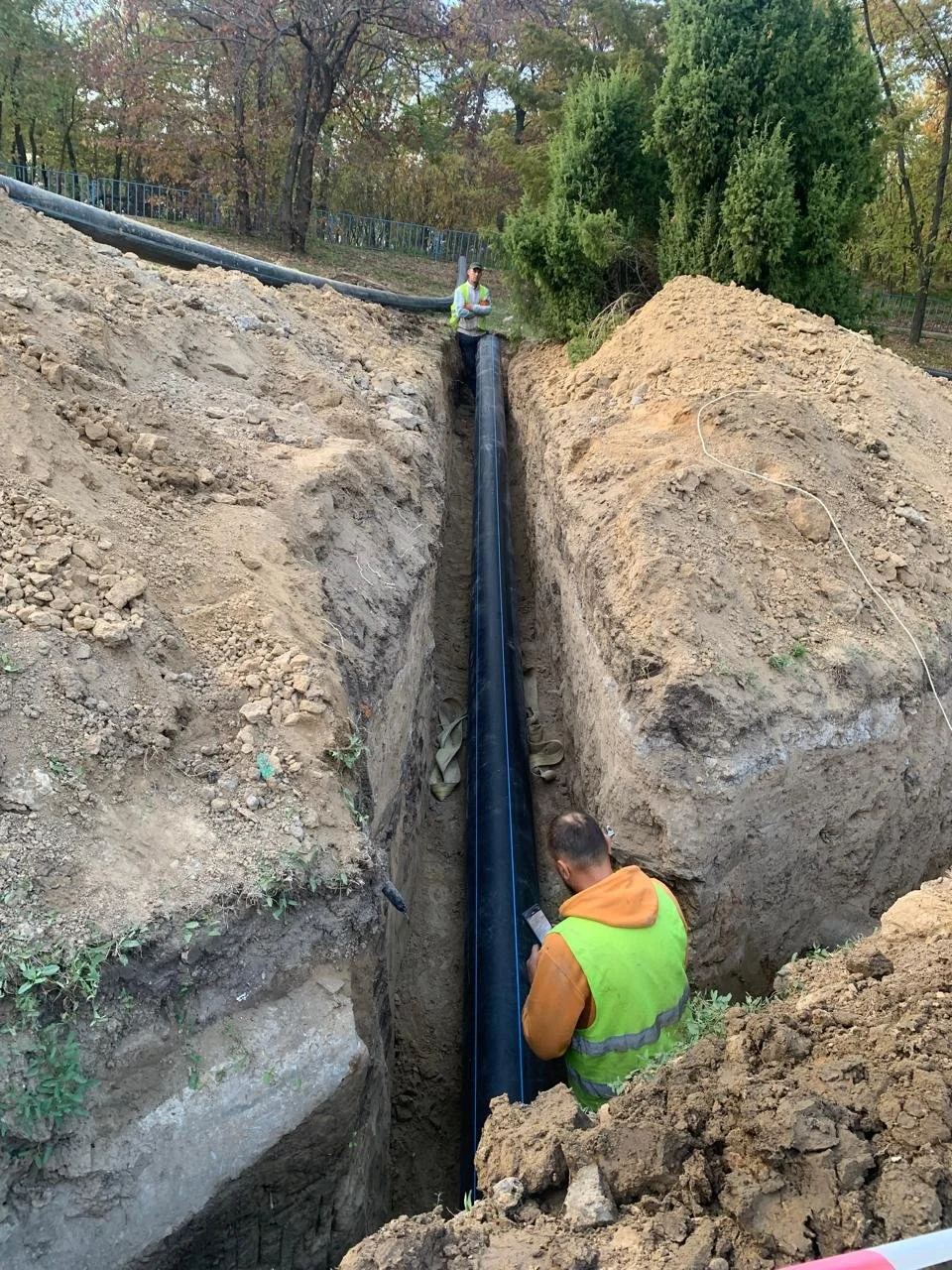
The Excavation: We dug deep into the hospital grounds to locate and replace the shattered mains that had caused the initial collapse.
The Internal Overhaul: We rebuilt the internal plumbing network to ensure that when water did return, the pressure would reach every floor.
The Independence (The Boreholes): Most critically, we drilled deep-water independent boreholes directly on the hospital campus.
The Result: Autonomy The drilling changed the equation. By tapping into an independent aquifer, we cut the hospital’s reliance on both the crumbling city grid and the daily water convoys.
The trucks stopped coming. The temporary stations were packed away. Today, when a surgeon needs to scrub in, they turn on the main tap, and the water flows—clean, pressurized, and limitless.
We took a facility that was managing a daily crisis and gave it total autonomy. Now, the water flows from the ground beneath them, ensuring that the work of saving lives is never threatened by a logistical delay.
Veronika’s Christmas Wish
Fifteen-year-old Veronika didn’t ask "Operation Santa" for a gadget or clothes. She asked for a washing machine to save her mother from the grueling daily labor of scrubbing clothes for five people by hand. Read the story of a daughter’s selfless wish and the machine that brought freedom to a family in limbo.
Fifteen-year-old Veronika didn't ask for much. In a world where teenagers usually dream of the latest gadgets or fashion, her mind was occupied by a much heavier reality. Her father was missing in action—likely killed defending the country—but without confirmation, he exists in a painful bureaucratic limbo. For his family, this meant not only grief but a total lack of financial assistance from the state.
Veronika watched her mother struggle to keep a household of five running on nothing. With three younger brothers to care for, the house was a whirlwind of energy and mess. But of all the burdens they carried, one stood out as a daily, grueling monument to their poverty: the laundry.
Historians and economists have long argued that the washing machine was the single greatest factor in women’s liberation—more pivotal to independence than perhaps any other invention. Before it, women were tethered to the home, spending days hauling water, boiling clothes, and scrubbing until their hands bled. It was a chore that stole time, energy, and opportunity.
Veronika may not have known the history, but she lived the reality.
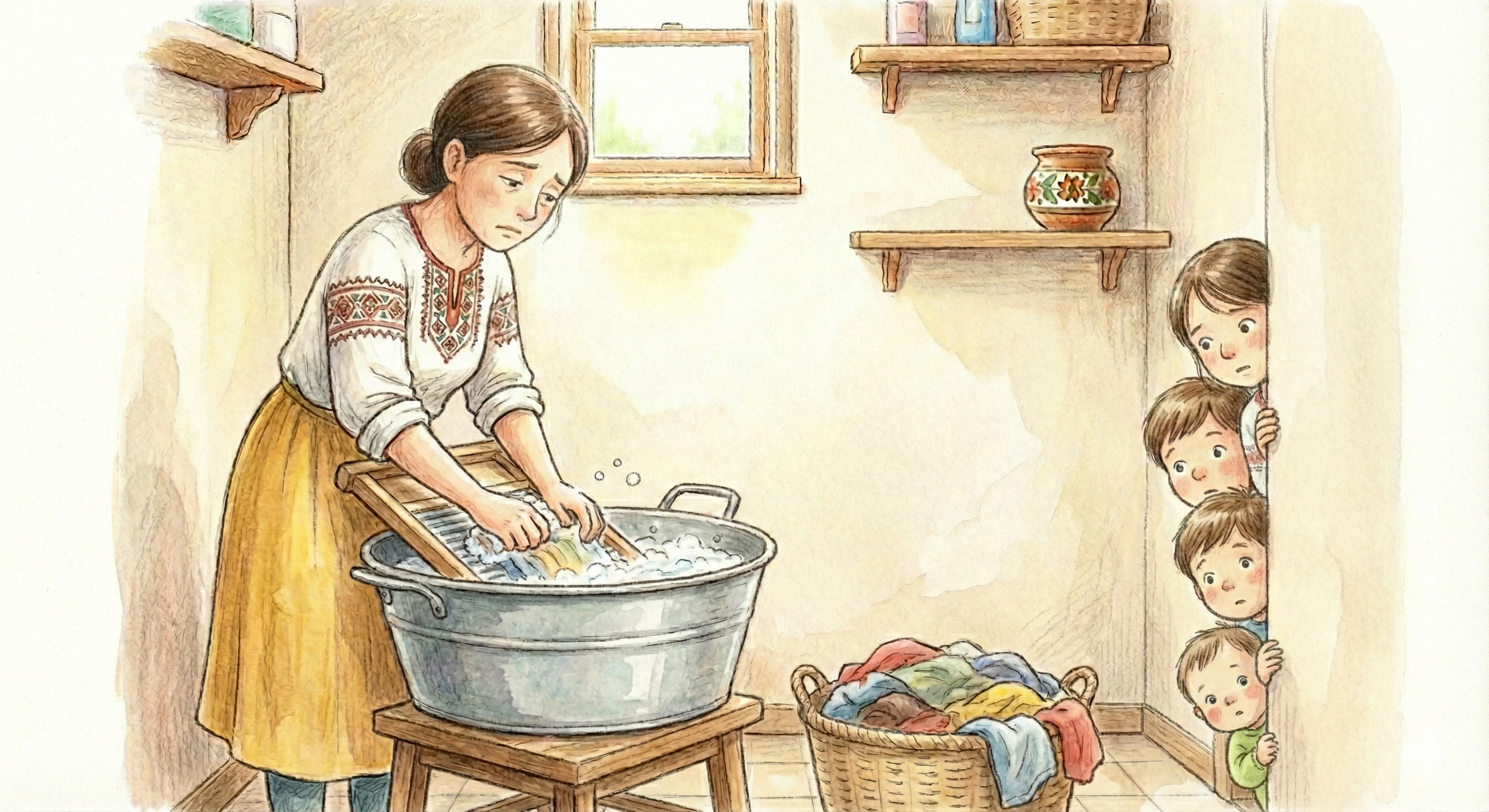
She watched the "time tax" poverty was charging her mother. With three growing boys, the pile of dirty clothes was relentless—mud, food, sweat, and the endless turnover of daily wear. Every day, her mother leaned over the bathtub, scrubbing heavy denim and sheets by hand. It wasn't just a chore; it was an exhausting physical assault that took hours—hours her mother desperately needed to manage the boys, to rest, or simply to breathe.
Veronika saw that as long as her mother was chained to that washboard, she was not free.
So, when she wrote a letter to "Operation Santa," Veronika didn't ask for a toy. She didn't ask for the things a 15-year-old girl should want. She asked for a washing machine.
It was a practical plea to buy her mother a few hours of freedom. She wanted to trade the red, swollen hands of her mother for the hum of a motor. She wanted to give her mother the gift of time.
We knew we had to answer. We understood that in a household hanging by a thread, a washing machine isn't a luxury—it’s a lifeline. Working through our trusted partners on the ground, we fulfilled her wish.
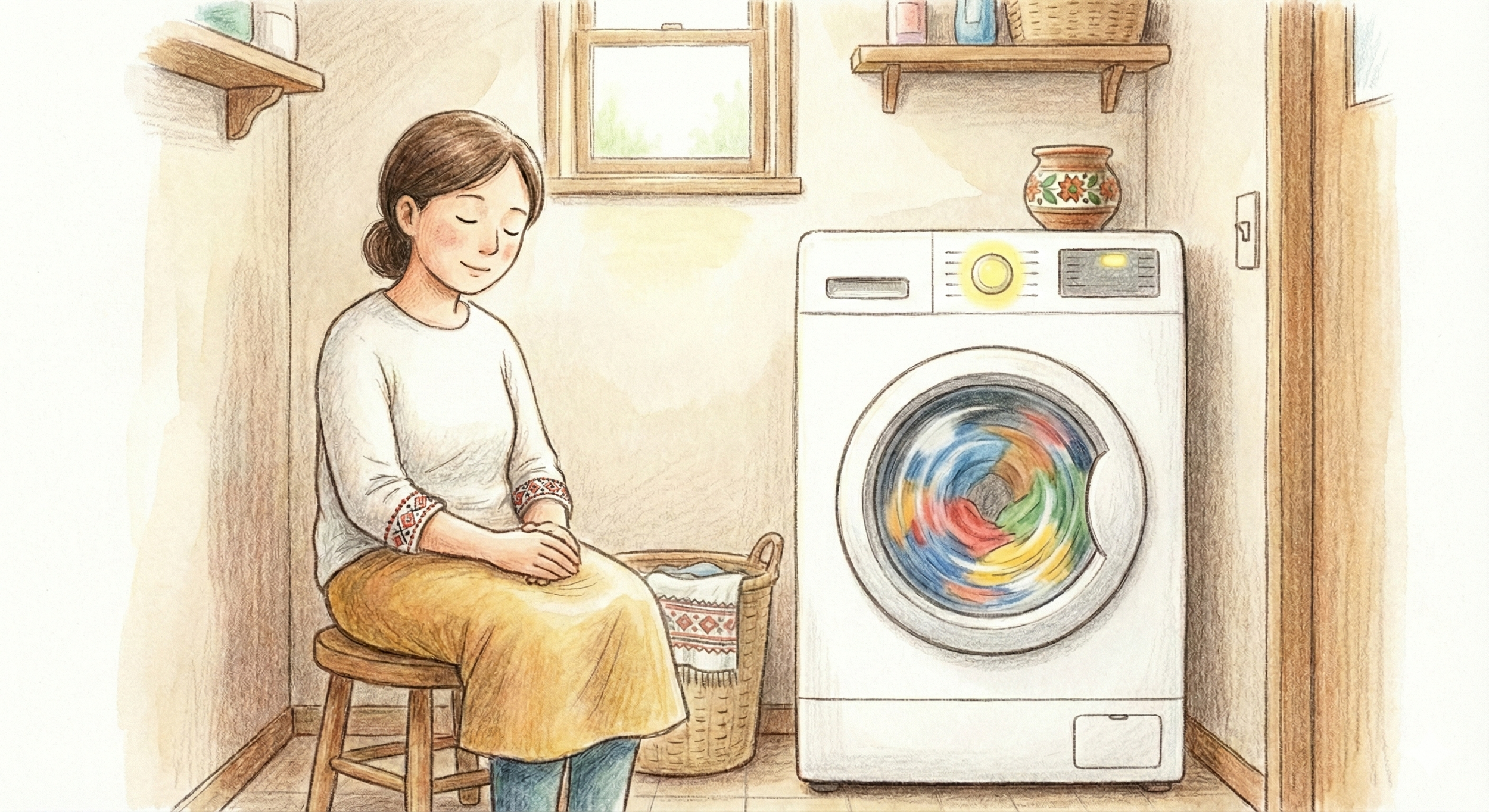
When the machine was installed, the change was instantaneous. The hours formerly spent in back-breaking labor were suddenly returned to the family. The machine hummed in the background, tackling the mountains of clothes generated by three brothers, while Veronika’s mother finally sat down.
But we weren't done.
We knew Veronika had stepped up to be the protector of her family, sacrificing her own childhood desires to secure her mother’s well-being. We wanted to remind her that she is still allowed to be young.
We sent a second box. Inside was the iPhone she had secretly dreamed of but never dared to ask for.
In that moment, a family defined by uncertainty felt the warmth of a global community. Veronika had given her mother the gift of time; we gave Veronika the gift of being a teenager again.
The Three Rooms of Mahala Orphanage
When we entered the facility in Chernivtsi, we found three rooms: one of silence, one of isolation, and one of chaos. Standing outside, the heartbreak was enough to bring our founder to tears. But we didn't just walk away. Read how we stabilized a collapsing system, partnered with EDF to bring joy back to forgotten children, and secured a sustainable future with UNICEF.
In early 2022, as the war sent shockwaves across the country, evacuations from the East forced thousands to flee West. In Chernivtsi, local institutions—already operating on thin margins—were suddenly inundated.
When our team entered the Mahala institution, we saw the human cost of this crisis. The facility was pushed beyond its breaking point. It was dilapidated and dimly lit, but the physical decay was secondary to the systemic collapse we witnessed inside.
Our visit took us through three distinct rooms, each revealing a different face of the tragedy.
The Silence
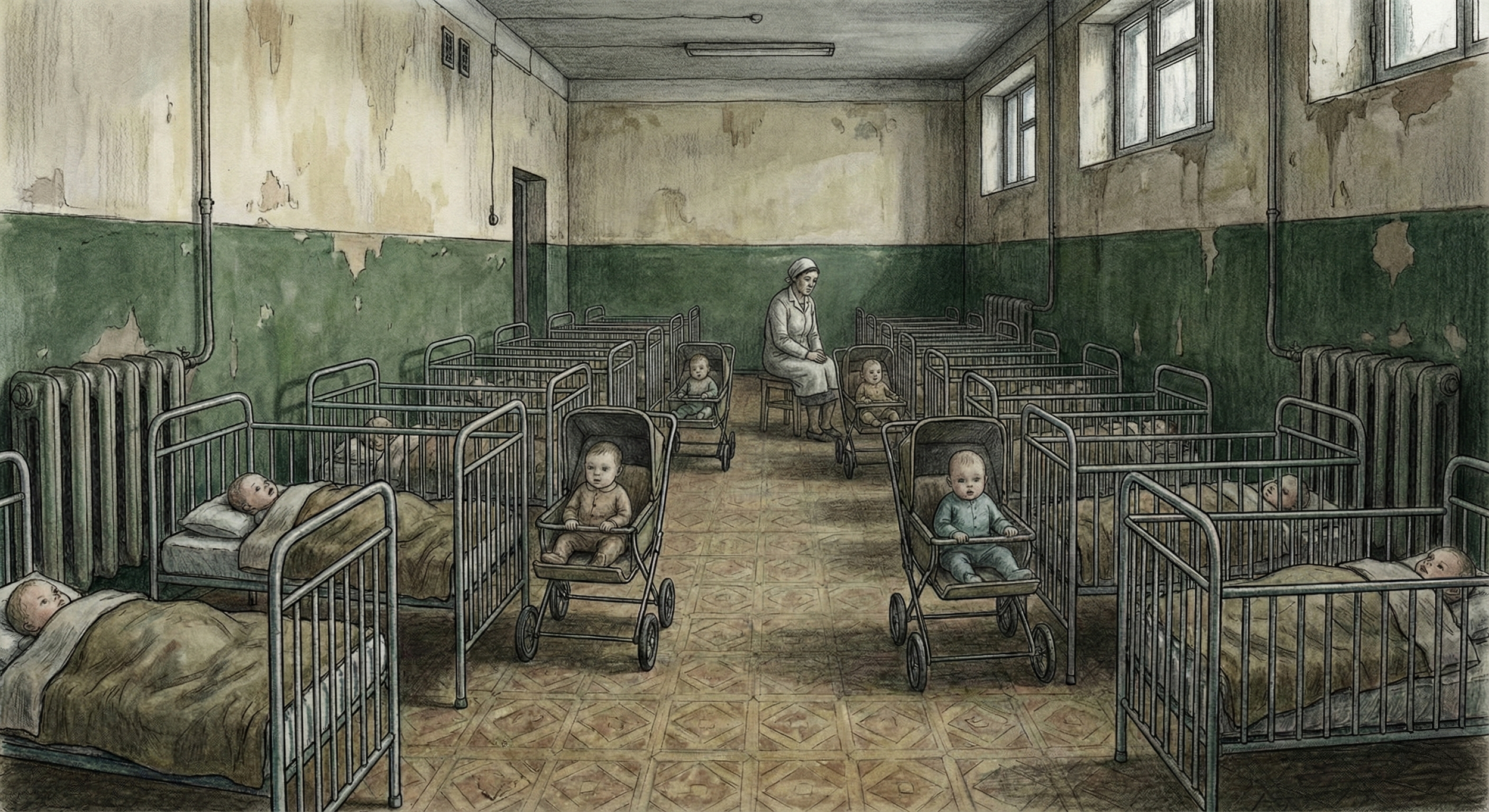
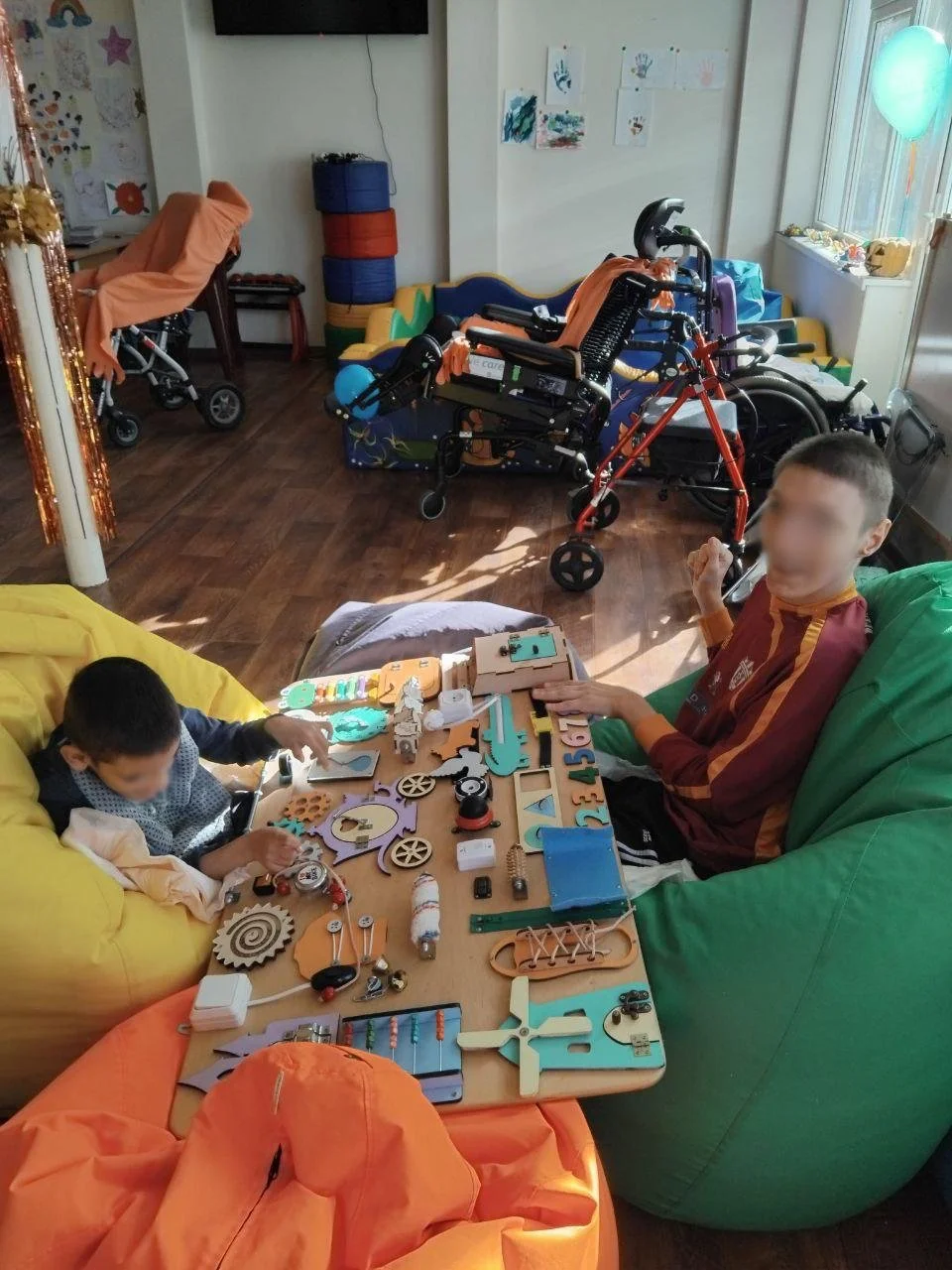
The first room was defined by its stillness. Here, we found a row of beds occupied by young children who were immobile and non-verbal. Many appeared to be living with severe developmental challenges like Fetal Alcohol Syndrome.
They lay in the semi-darkness, staring at the ceiling. The silence was unnatural for a children's ward. Watching over them was a single caretaker, exhausted and stretched thin, trying to care for a dozen children who needed one-on-one attention just to survive.
The Isolation
The second room contained a different kind of heartbreak. Here, there was just one boy, alone.
Unlike the children in the first room, he was eager to connect. He was verbal, bright, and fully able to chat with us. However, he had a physical disability that prevented him from walking. Because the facility lacked the resources for rehabilitation or proper integration, he was isolated in a separate room. He was a prisoner not of his mind, but of his circumstances—a social child left in solitary confinement simply because he could not walk out the door.
The Chaos
The third room was a stark contrast to the silence of the first two. It was a classroom packed with boys under the age of 18, all living with various disabilities. The energy was frenetic and overwhelming.
In the middle of this whirlwind stood a single woman. She was not teaching; she was barely holding back the tide. She was responsible for the safety and care of the entire group, working for a salary that we learned was often as low as $200 a month. She was a hero, but she was drowning.
Throughout the tour, our founder, Zhanna, maintained a professional composure, asking questions and assessing needs. But the moment the heavy doors clicked shut behind us and we stepped into the fresh air, the weight of the "Three Rooms" took over.
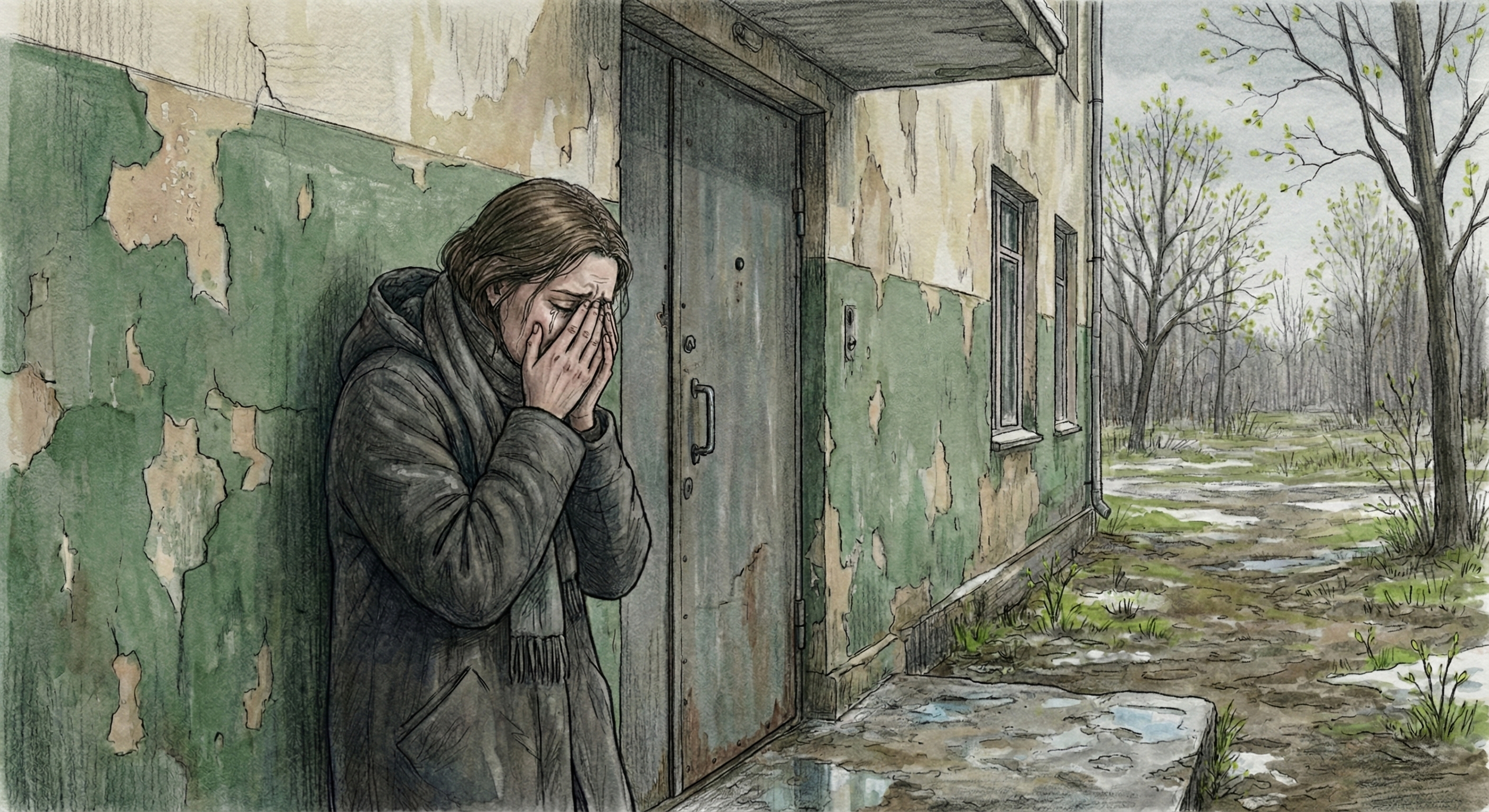
Standing outside the facility, away from the eyes of the staff, she wept. She cried for the immobile children, for the lonely boy, and for the overwhelmed staff trying to hold it all together in the shadow of war.
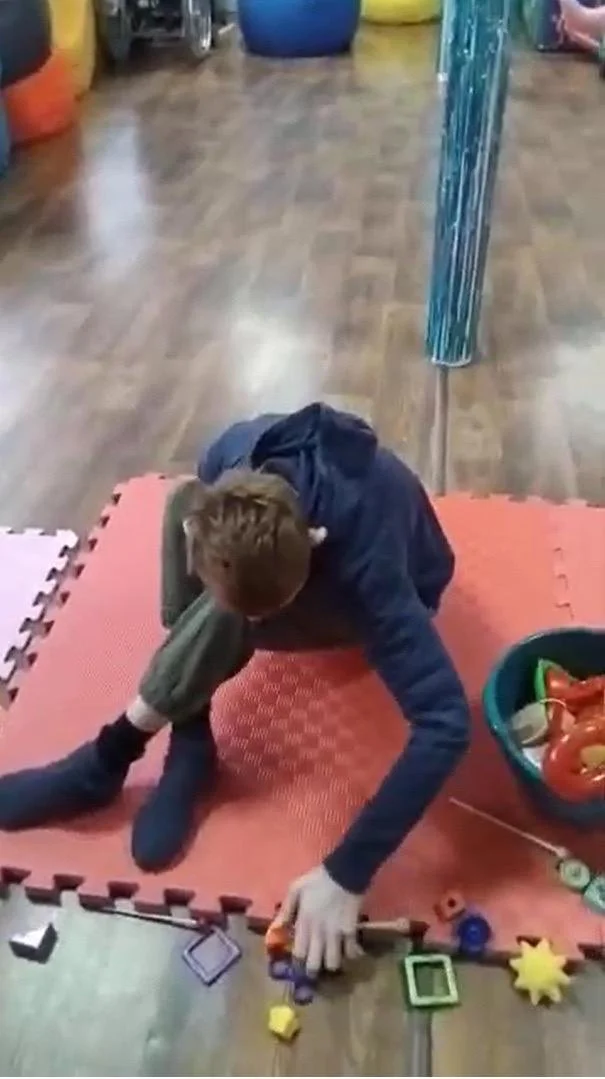
We dried our tears and went to work. First, we acted as a Stabilizer, funding additional nursing staff to fix the dangerous caretaker-to-child ratios. Then, we partnered with the European Disability Forum (EDF) to deploy a team of therapists and social workers to begin intensive rehabilitation.
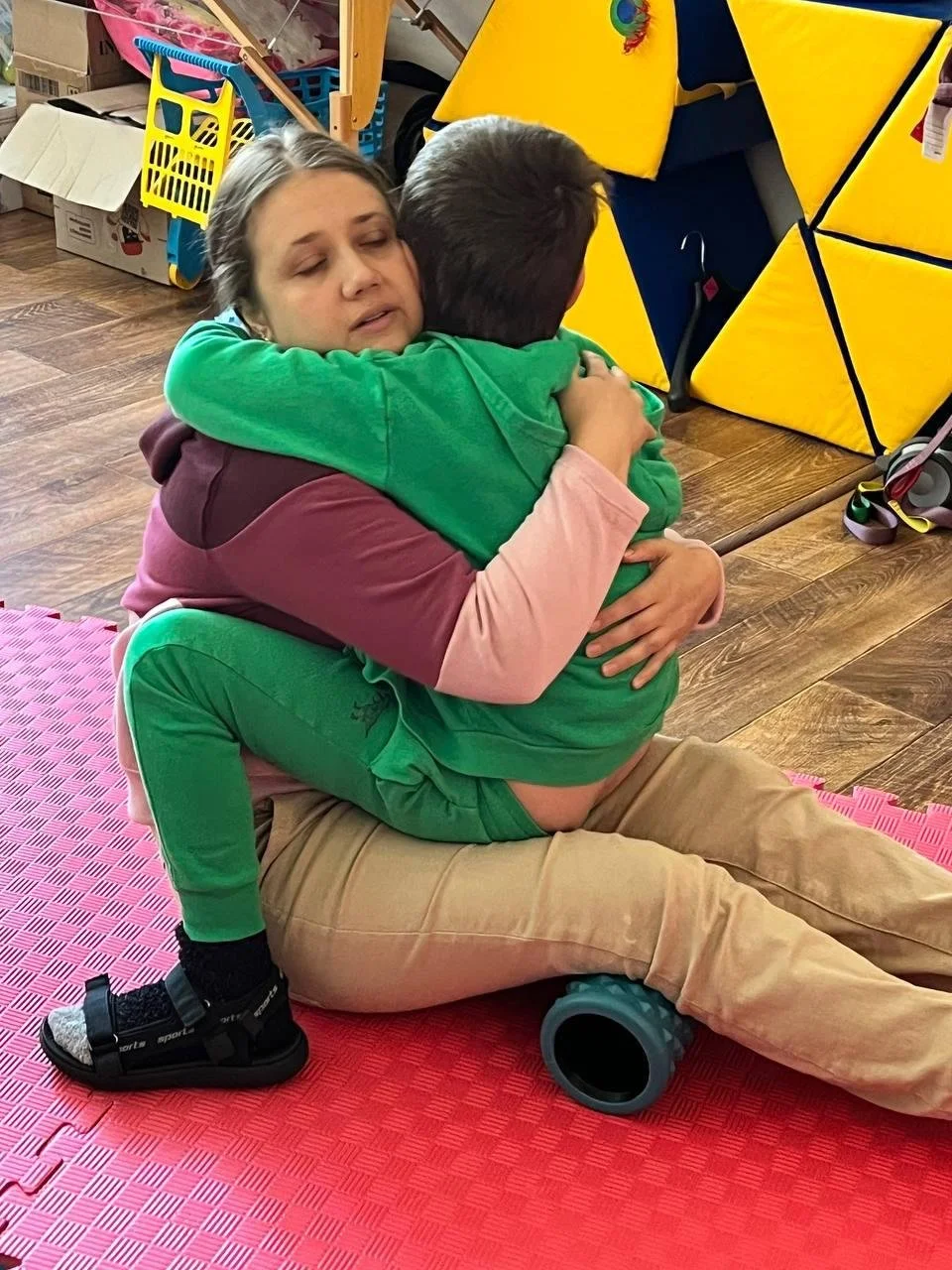
The goal was critical: to catch these children up developmentally. For years, these children had been starved of the basic building blocks of humanity. The therapy was designed to flood their world with the interactions they had missed. It wasn't just about medical care; it was about human connection—purposeful touch, constant talking, eye contact, and movement. The therapists got on the floor and rebuilt the children's social world from the ground up.
The result was not just medical; it was magical.
As the children received the interaction they had been denied, a transformation took place. The "great success" wasn't just that they learned to walk or run—it was that they learned to be.
Though they lived with disabilities and had suffered immense neglect, we found no anger, hate, or violence in them. Instead, they became beacons of pure joy. Friendships formed between children who had once been isolated in their beds. They began to speak, to play, and to express themselves.
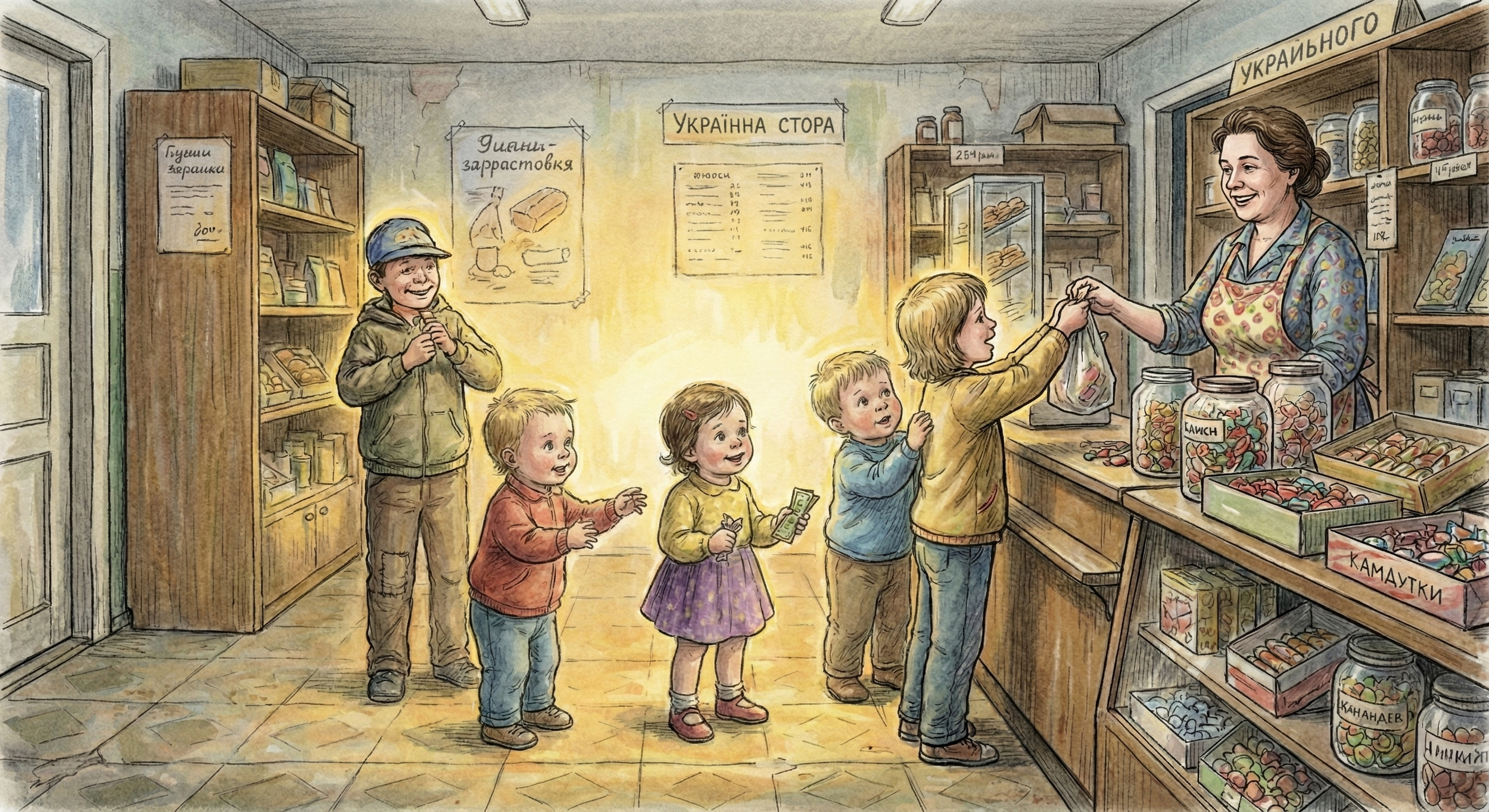
The world opened up. Children who had never left the facility started taking trips to the local convenience store, proudly buying candies with their own hands. They showed love to everyone they met, bringing a contagious energy to a place that had once been defined by silence.
The Handover The program's success proved that this facility could be more than a warehouse. Impressed by the stabilized structure and the flourishing children, UNICEF has now stepped in to adopt the program. They are providing the long-term funding and oversight needed to sustain this progress.
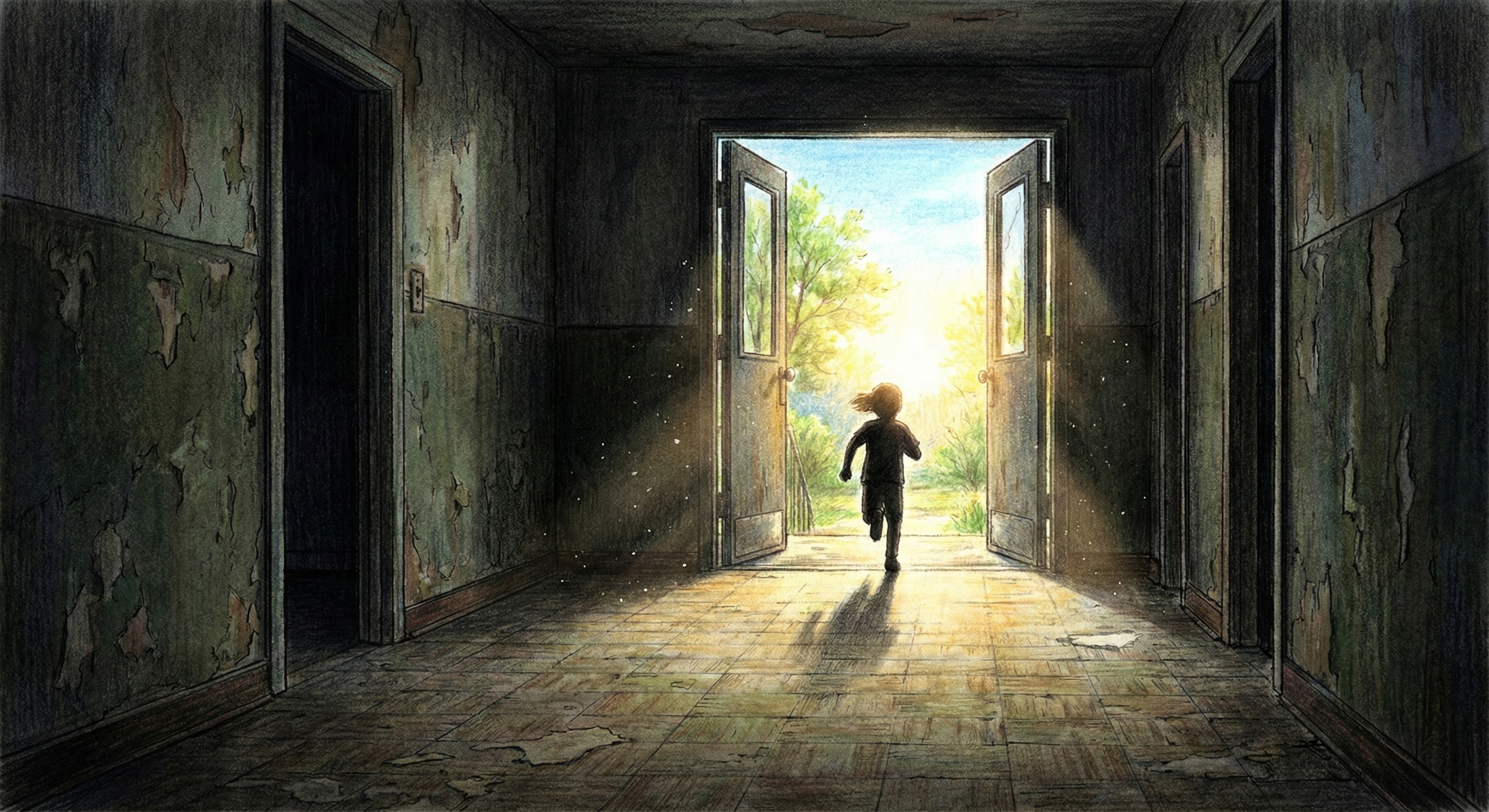
We found a facility on the brink of collapse. We left a community full of love. Our work at Mahala is done, but for those children, the door to a better life has finally opened.

A Reservoir for the Community
In Mykolaiv, entire neighborhoods were paralyzed by the uncertain arrival times of water trucks following the Kakhovka Dam disaster. By installing 1,000-liter community reservoirs, Bird of Light created a system where trucks can efficiently "drop and go," securing 24/7 water access and restoring dignity to vulnerable residents.
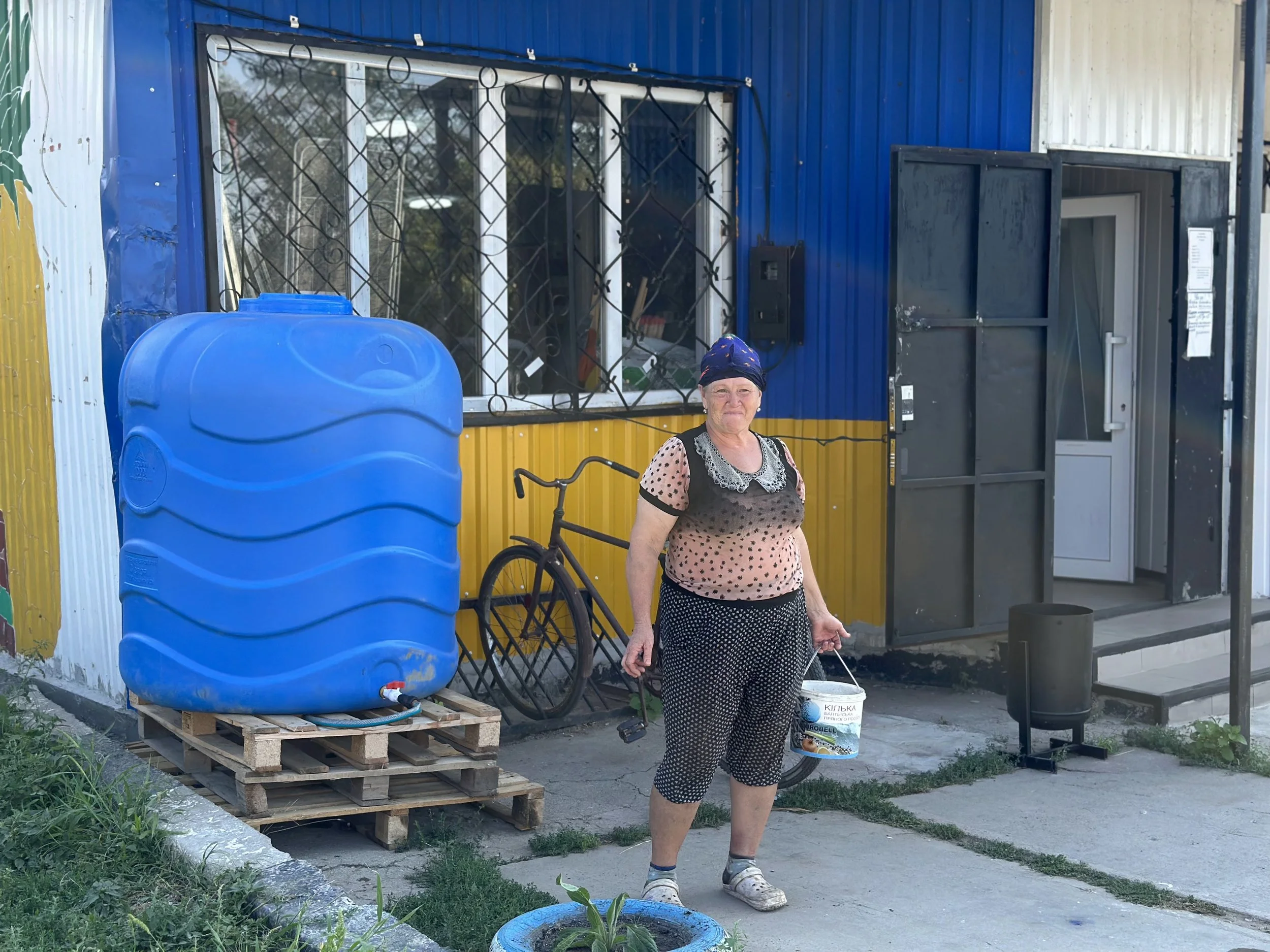
For Baba Halya, the war shrank her world down to a single, terrifying source of anxiety: the water truck schedule. But she wasn’t alone—her entire neighborhood in Mykolaiv was living on the same fragile timeline.
Following the destruction of the region's primary water intake and the subsequent Kakhovka disaster, Mykolaiv was left dry. Survival in these frontline communities became a brutal game of logistics. A water truck would navigate the dangerous roads to arrive in the neighborhood, creating a sudden bottleneck of desperation.
The system was inefficient and unforgiving. The truck had to idle while dozens of residents filled individual buckets, one by one. If neighbors couldn't make it to the drop-off point in time, or if the queue was too long, the truck would eventually have to leave to hit its next target.
This left the community facing an unknown wait for the next delivery. The uncertainty forced everyone—from young mothers to the elderly—to organize their entire lives around the arrival of a vehicle that might be delayed by days due to shelling or mechanical failure.
The Strategy: Community Capacity Bird of Light stepped in to fix the distribution node itself. We identified that the bottleneck was the "transfer time" between the truck and the residents.
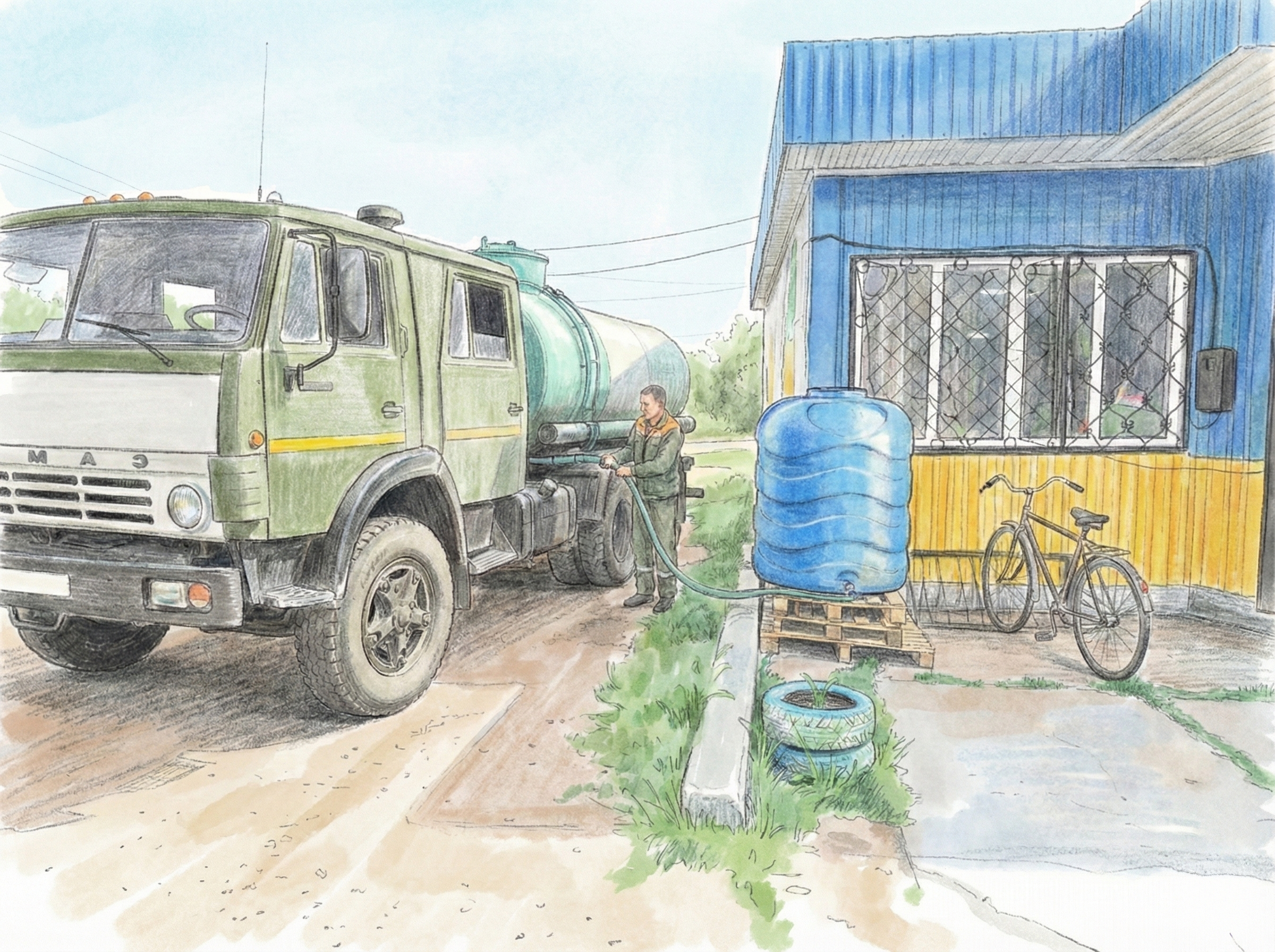
We procured and installed large, 1,000-liter industrial water storage containers in villages throughout the hard-hit Mykolaiv regions.
This simple infrastructure update transformed the logistics for the entire community:
The "Drop-and-Go" Efficiency: Now, when the water truck arrives, it doesn't wait for a slow line of buckets. It unloads thousands of liters directly into these secure communal tanks in minutes and then continues on its route. This reduces the truck's exposure to danger and allows them to serve more streets in a single day.
The Community Reservoir: The water is now safely stored in the neighborhood, available 24/7.
The Result: Collective Security. The panic has vanished from the community. The tank acts as a permanent reservoir for everyone.
Neighbors no longer compete for a spot in line. The truck driver no longer has to stress about the schedule. And for Baba Halya, the autonomy is restored. She can walk to the tank when she is ready, filling her pitcher on her own terms.
We turned a chaotic, anxiety-filled event into a passive, reliable system. By creating this buffer, we restored dignity not just to one woman, but to entire Mykolaiv communities.