
A Reservoir for the Community
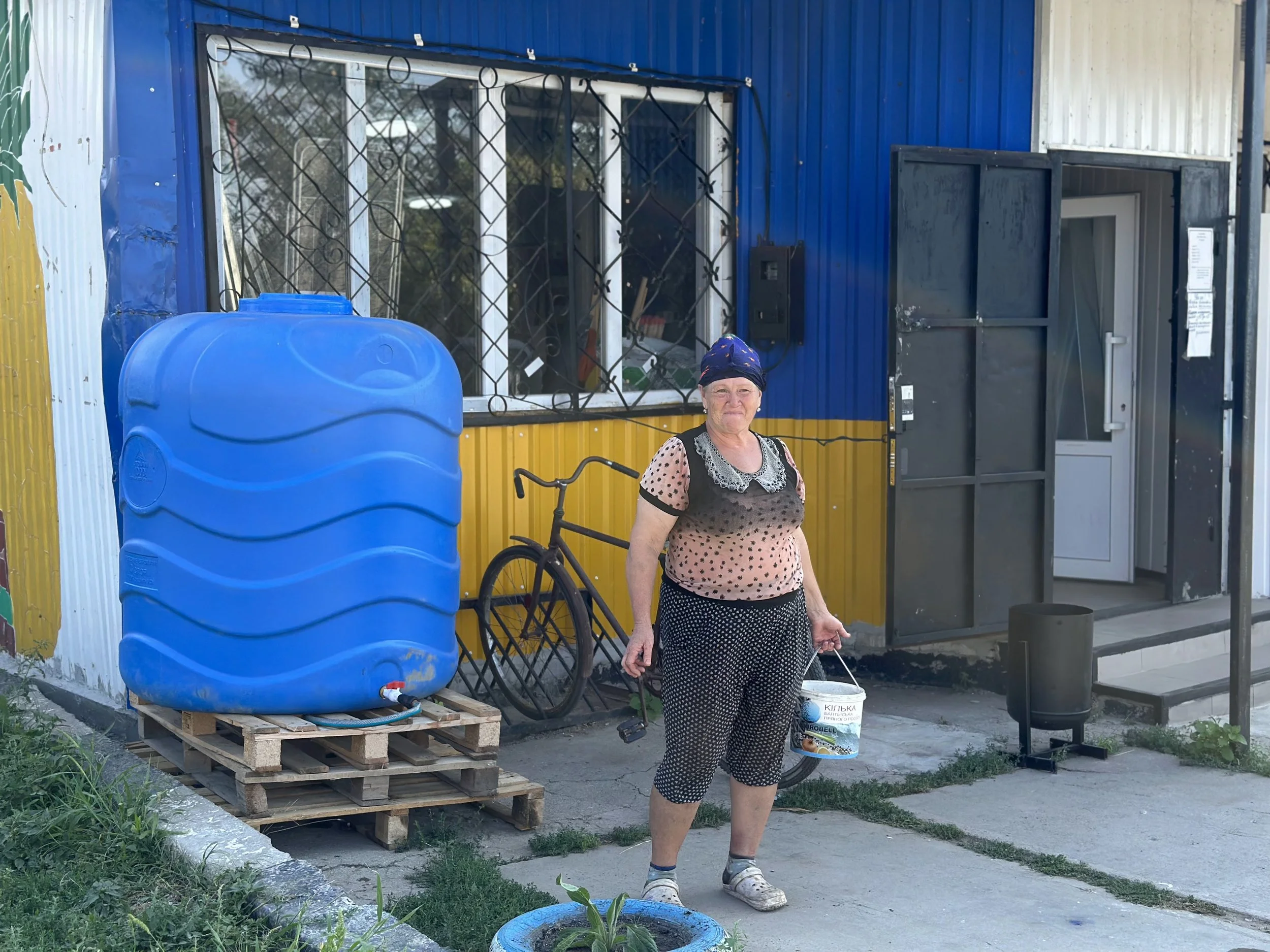
For Baba Halya, the war shrank her world down to a single, terrifying source of anxiety: the water truck schedule. But she wasn’t alone—her entire neighborhood in Mykolaiv was living on the same fragile timeline.
Following the destruction of the region's primary water intake and the subsequent Kakhovka disaster, Mykolaiv was left dry. Survival in these frontline communities became a brutal game of logistics. A water truck would navigate the dangerous roads to arrive in the neighborhood, creating a sudden bottleneck of desperation.
The system was inefficient and unforgiving. The truck had to idle while dozens of residents filled individual buckets, one by one. If neighbors couldn't make it to the drop-off point in time, or if the queue was too long, the truck would eventually have to leave to hit its next target.
This left the community facing an unknown wait for the next delivery. The uncertainty forced everyone—from young mothers to the elderly—to organize their entire lives around the arrival of a vehicle that might be delayed by days due to shelling or mechanical failure.
The Strategy: Community Capacity Bird of Light stepped in to fix the distribution node itself. We identified that the bottleneck was the "transfer time" between the truck and the residents.
We procured and installed large, 1,000-liter industrial water storage containers in villages throughout the hard-hit Mykolaiv regions.
This simple infrastructure update transformed the logistics for the entire community:
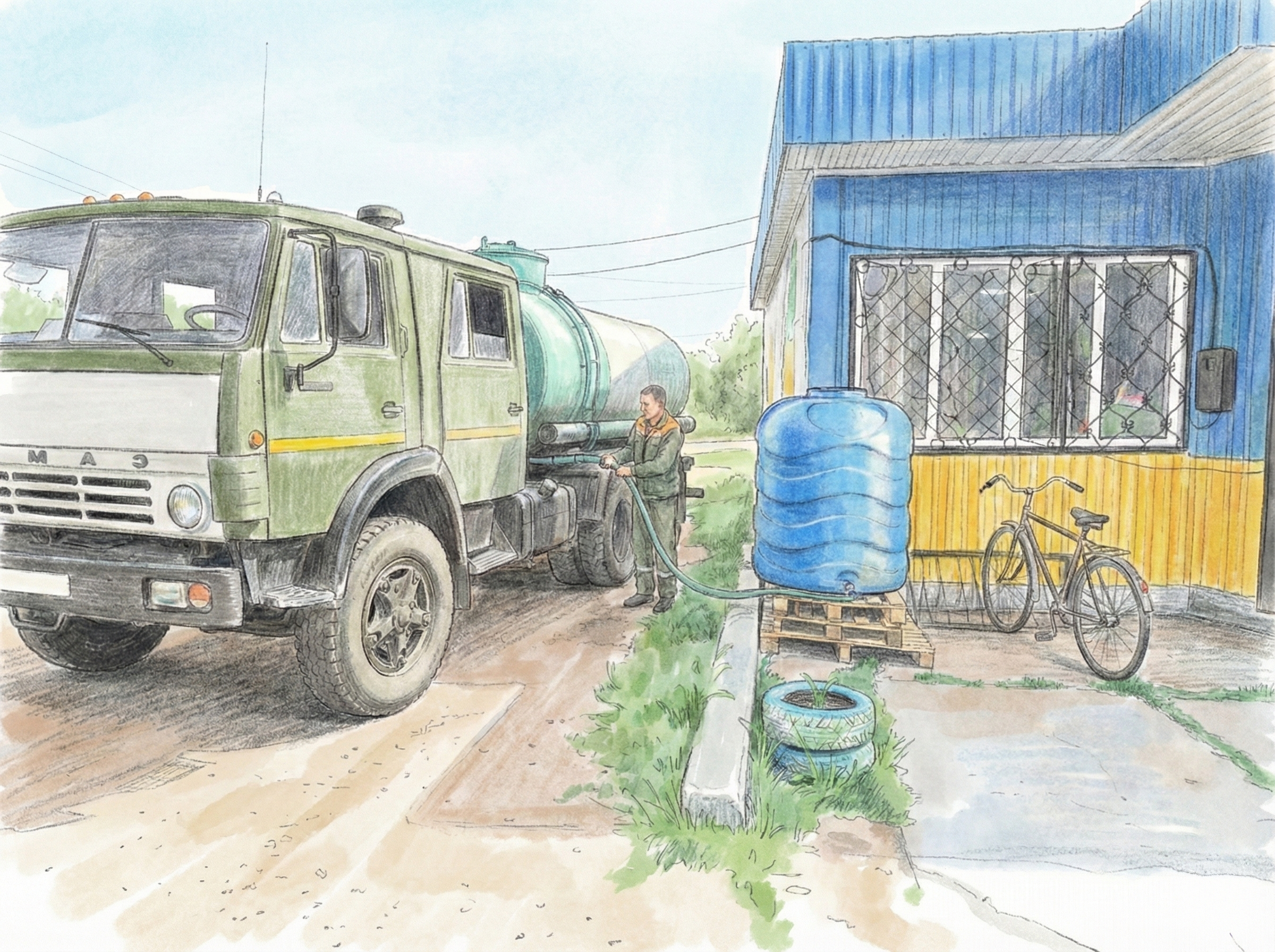
The "Drop-and-Go" Efficiency: Now, when the water truck arrives, it doesn't wait for a slow line of buckets. It unloads thousands of liters directly into these secure communal tanks in minutes and then continues on its route. This reduces the truck's exposure to danger and allows them to serve more streets in a single day.
The Community Reservoir: The water is now safely stored in the neighborhood, available 24/7.
The Result: Collective Security. The panic has vanished from the community. The tank acts as a permanent reservoir for everyone.
Neighbors no longer compete for a spot in line. The truck driver no longer has to stress about the schedule. And for Baba Halya, the autonomy is restored. She can walk to the tank when she is ready, filling her pitcher on her own terms.
We turned a chaotic, anxiety-filled event into a passive, reliable system. By creating this buffer, we restored dignity not just to one woman, but to entire Mykolaiv communities.
