
Veronika’s Christmas Wish
Fifteen-year-old Veronika didn't ask for much. In a world where teenagers usually dream of the latest gadgets or fashion, her mind was occupied by a much heavier reality. Her father was missing in action—likely killed defending the country—but without confirmation, he exists in a painful bureaucratic limbo. For his family, this meant not only grief but a total lack of financial assistance from the state.
Veronika watched her mother struggle to keep a household of five running on nothing. With three younger brothers to care for, the house was a whirlwind of energy and mess. But of all the burdens they carried, one stood out as a daily, grueling monument to their poverty: the laundry.
Historians and economists have long argued that the washing machine was the single greatest factor in women’s liberation—more pivotal to independence than perhaps any other invention. Before it, women were tethered to the home, spending days hauling water, boiling clothes, and scrubbing until their hands bled. It was a chore that stole time, energy, and opportunity.
Veronika may not have known the history, but she lived the reality.
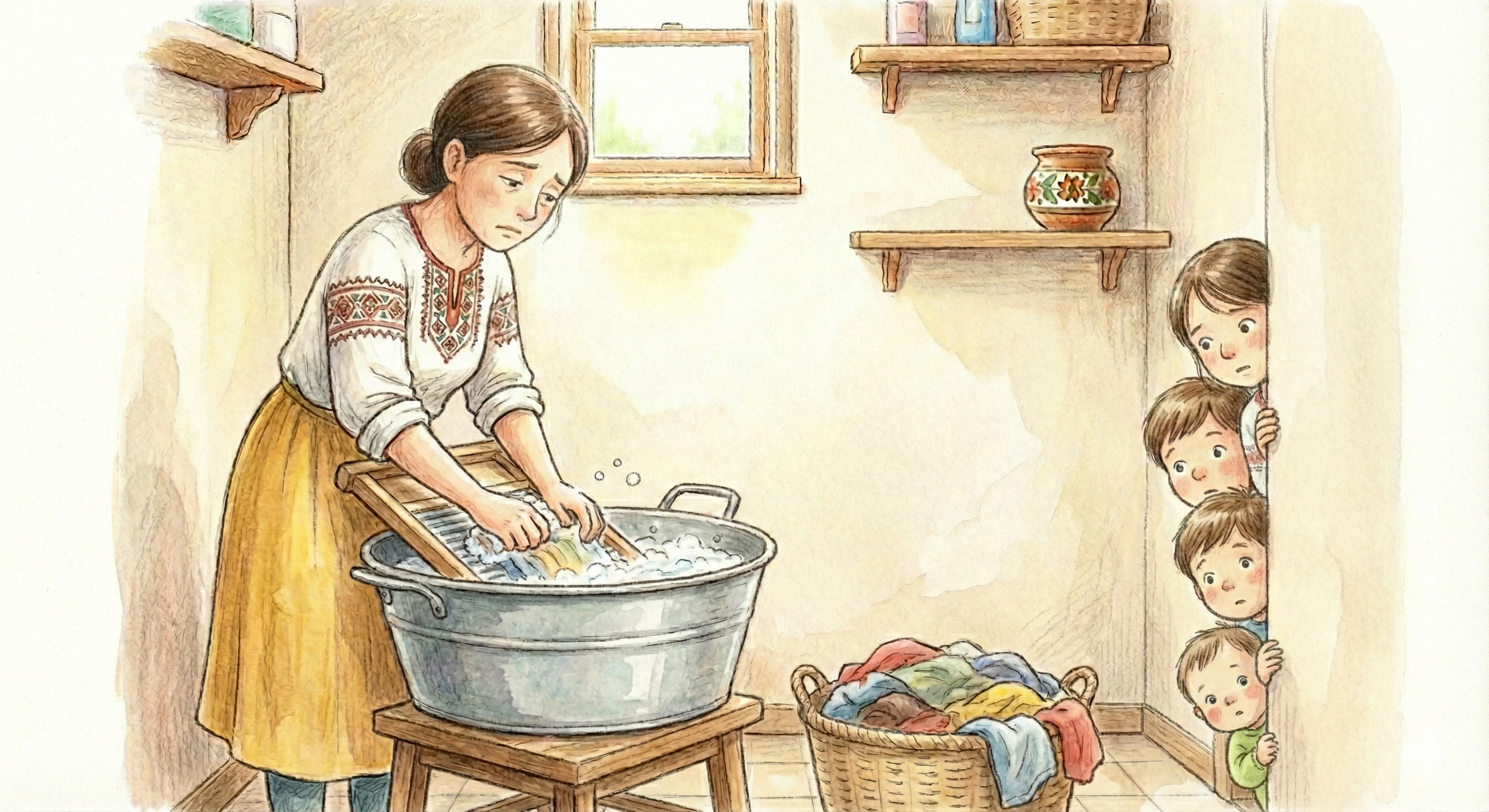
She watched the "time tax" poverty was charging her mother. With three growing boys, the pile of dirty clothes was relentless—mud, food, sweat, and the endless turnover of daily wear. Every day, her mother leaned over the bathtub, scrubbing heavy denim and sheets by hand. It wasn't just a chore; it was an exhausting physical assault that took hours—hours her mother desperately needed to manage the boys, to rest, or simply to breathe.
Veronika saw that as long as her mother was chained to that washboard, she was not free.
So, when she wrote a letter to "Operation Santa," Veronika didn't ask for a toy. She didn't ask for the things a 15-year-old girl should want. She asked for a washing machine.
It was a practical plea to buy her mother a few hours of freedom. She wanted to trade the red, swollen hands of her mother for the hum of a motor. She wanted to give her mother the gift of time.
We knew we had to answer. We understood that in a household hanging by a thread, a washing machine isn't a luxury—it’s a lifeline. Working through our trusted partners on the ground, we fulfilled her wish.
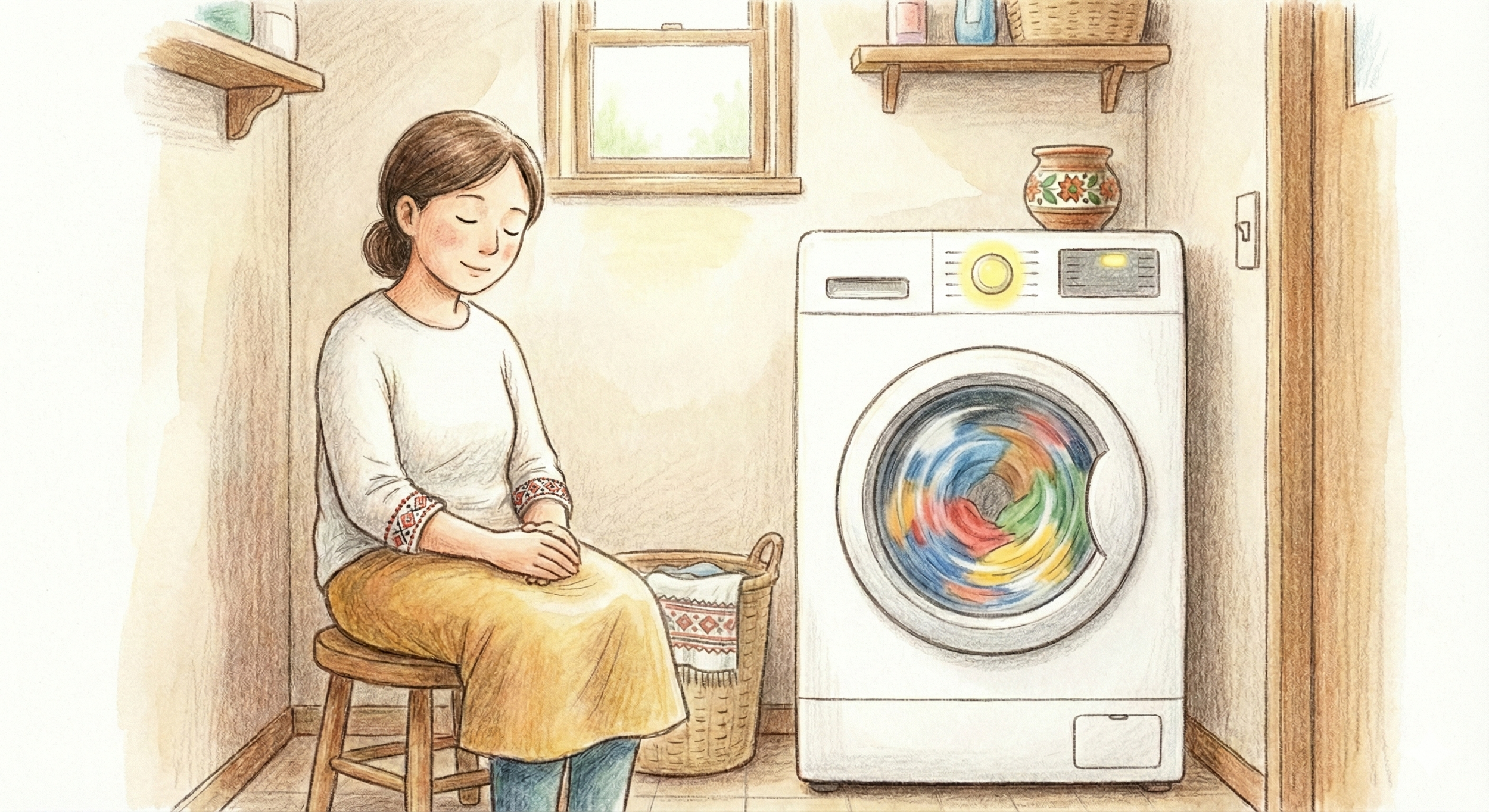
When the machine was installed, the change was instantaneous. The hours formerly spent in back-breaking labor were suddenly returned to the family. The machine hummed in the background, tackling the mountains of clothes generated by three brothers, while Veronika’s mother finally sat down.
But we weren't done.
We knew Veronika had stepped up to be the protector of her family, sacrificing her own childhood desires to secure her mother’s well-being. We wanted to remind her that she is still allowed to be young.
We sent a second box. Inside was the iPhone she had secretly dreamed of but never dared to ask for.
In that moment, a family defined by uncertainty felt the warmth of a global community. Veronika had given her mother the gift of time; we gave Veronika the gift of being a teenager again.
